„Frei AquaService didn’t recommend the most expensive solution, but rather the one that best suited our needs. This expert advice is exactly what we’re looking for—pragmatic, honest, and to the point.»
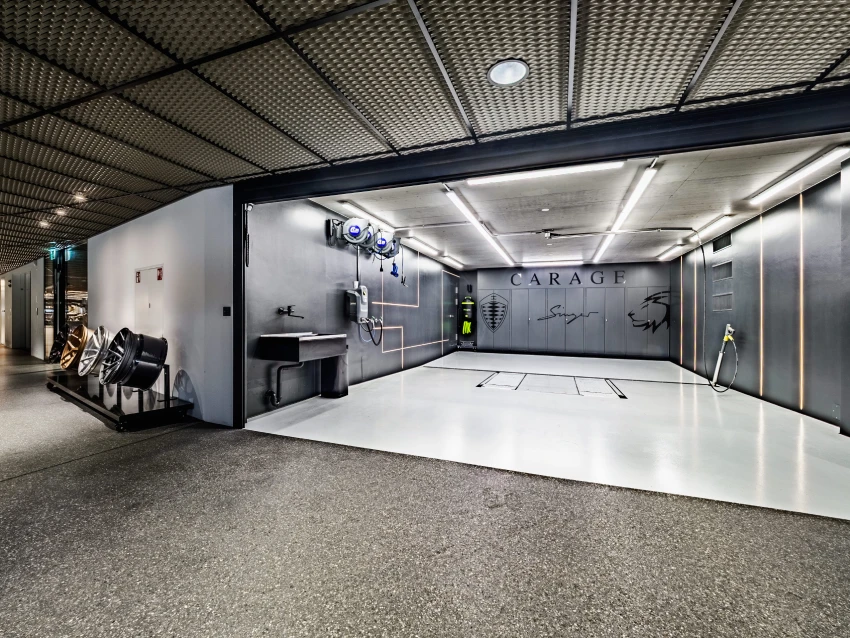
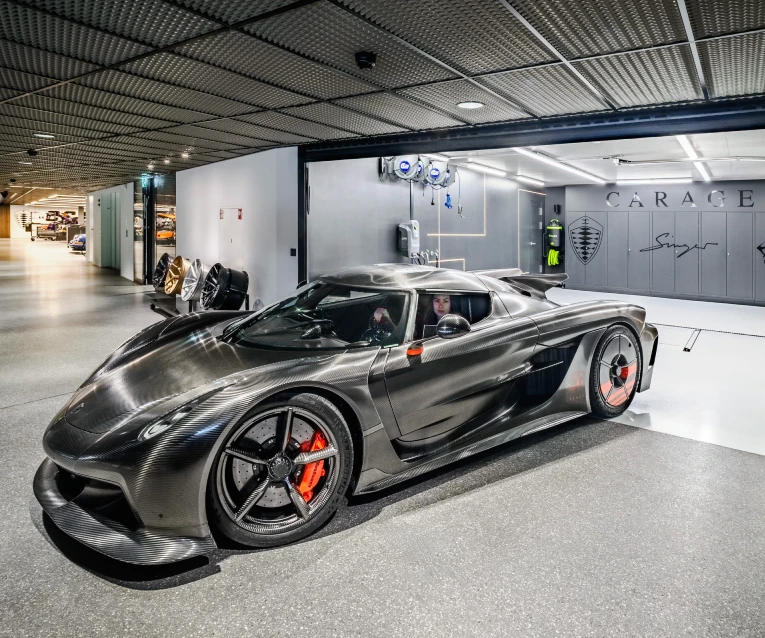
Koenigsegg Switzerland needed a solution for producing demineralized water for its service location in Adligenswil. Goal: To rinse vehicles with demineralized water after the main wash cycle to achieve a perfect finish without limescale or water spots—a standard that goes without saying for a brand like Koenigsegg.
The baseline values on site were clearly defined:
Before our on-site visit, a competitor had already offered a high-performance reverse osmosis system. However, during the needs assessment with Mr. Struve, it quickly became clear that the customer wasn’t looking for the largest possible system, but rather a solution tailored precisely to his needs.
It is precisely in this situation that it becomes clear whether a solution makes economic sense—or whether the customer is paying for an oversized solution that they don't even need.
A clear overview from the initial contact through to the completed installation.
It took about two weeks from the initial inquiry to the completion of the fully operational system.
Based on the actual consumption figures, we calculated that a VE-50 cartridge is entirely sufficient for the intended application. Given these water parameters, its capacity allows for the treatment of approximately 500 vehicles before the resin needs to be replaced.
This makes the solution significantly more cost-effective than a complete reverse osmosis system, while still providing customers with the water quality needed for a perfect car finish.
Water quality was verified on-site using measurement techniques. The results speak for themselves:
In practice, these values mean that no mineral residue remains on the paint after drying—resulting in a perfectly spotless finish.
Both technologies have their merits. Which solution is the right one depends on the specific water consumption and usage profile. Here is a clear comparison:
| Criterion | VE-50 Cartridge (selected) | Reverse osmosis system |
| Space requirements | Very compact | Significantly larger |
| Wastewater | None | Rinse Water Loss |
| Maintenance | Resin Replacement Only | Membrane Service, Filter Replacement, Cleaning |
| Behavior During a Standstill | No problem | Damages the membranes |
| A good starting point is | Up to about 100 l/day | Starting at about 100 liters per day, 5 days a week |
| Life | ~15 years (housing) | 7–12 years (depending on the membrane) |
Technical Sales Consultant
Frei AquaService AG
Your Specialist
Bern, French-speaking Switzerland, and industrial facilities.
Frei AquaService AG – Available 24/7 throughout Switzerland.
„If you know exactly what a system’s actual needs are, you can size it appropriately. It would have been easier to sell a larger system—but in the long run, it’s better for both sides if the solution is economically and technically tailored to the needs.«
Demineralized water (deionized water) contains no dissolved minerals. As a result, no limescale or water spots remain on the paint when the vehicle dries—a prerequisite for a professional vehicle finish, especially on dark or high-quality paint jobs.
For moderate water consumption—as a general guideline, up to about 100 liters per day, 5 days a week—a deionization cartridge is usually more cost-effective. It saves space, produces no wastewater, and has no issues with membrane fouling. For significantly higher consumption levels, a reverse osmosis system becomes a more attractive option.
The service life depends directly on the inlet conductivity and the volume of water drawn. Based on the specific values in this case study (280 µS/cm raw water, 15–20 liters per vehicle), one cartridge is sufficient for approximately 500 vehicles. The resin is typically replaced about once a year.
For a streak-free finish, the rinse water should have a conductivity of less than 10 µS/cm. With a properly sized deionization cartridge, values around 1 µS/cm can be achieved—which is far better than what is practically required.