«The test installation won us over: The vehicles dry without leaving any spots, and we don't have to polish them afterward. This is exactly the kind of straightforward, professionally executed solution we were looking for.»
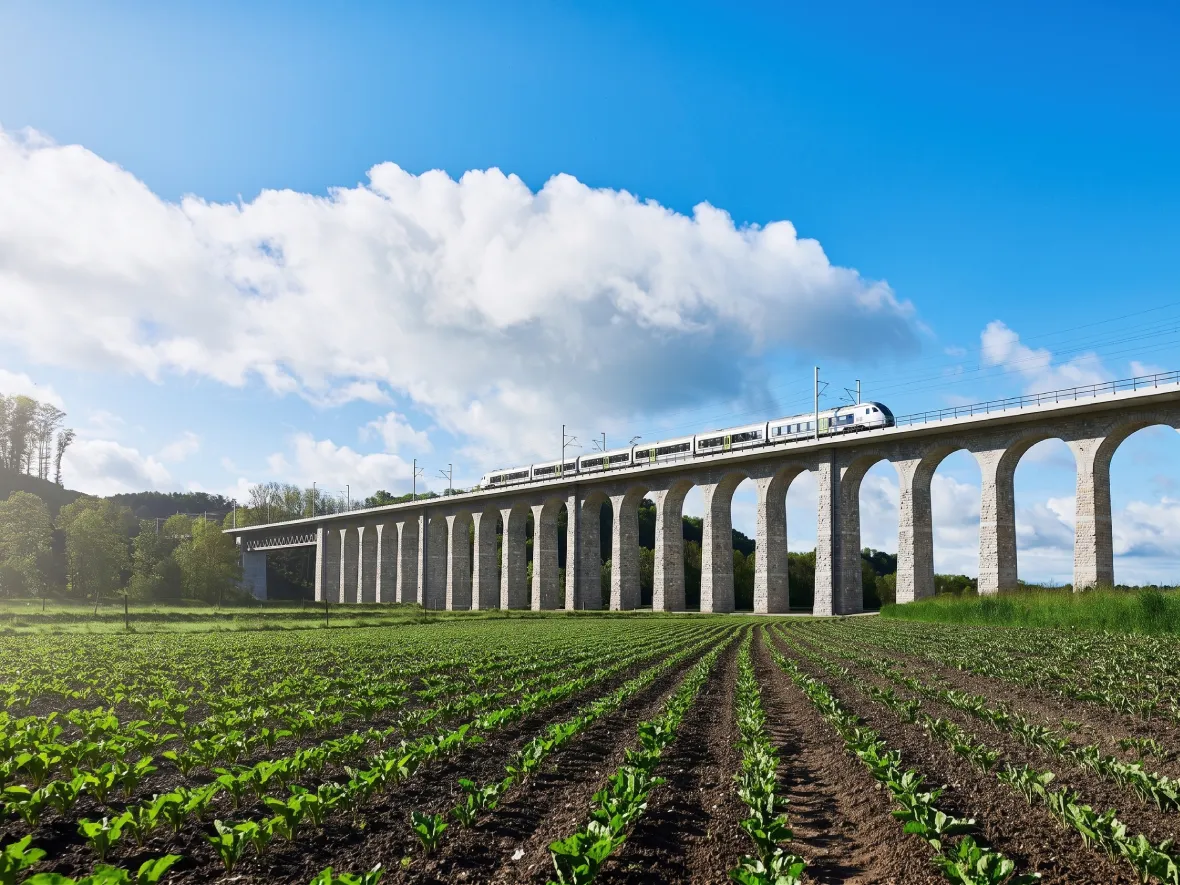
On July 27, 1906, the Bern–Lötschberg–Simplon Alpine Railway Company (BLS) was founded. Its most significant project was the construction of the Lötschberg Tunnel, which opened in 1913 and created an important link between the Bernese Oberland and the Valais.
Today, BLS AG, as the successor company, ranks among Switzerland’s most important rail and infrastructure operators. The BLS Netz AG in-house fire department in Frutigen ensures safe operations around the Lötschberg Base Tunnel with its fleet of vehicles and fire engine.

During a guided tour of the Lötschberg Base Tunnel and the BLS Netz AG fire department in Frutigen, our Technical Sales Consultant Philipp Bieri struck up a conversation with Raphael Romang, the firefighter on duty. The topic: the fire trucks’ washing facility.
Despite regular cleaning, stubborn limescale stains appeared on the emergency vehicles—a clear sign that conventional tap water was the culprit. With a raw water hardness of about 28 °fH, every time the vehicles dry off, visible mineral deposits are left on the paint.
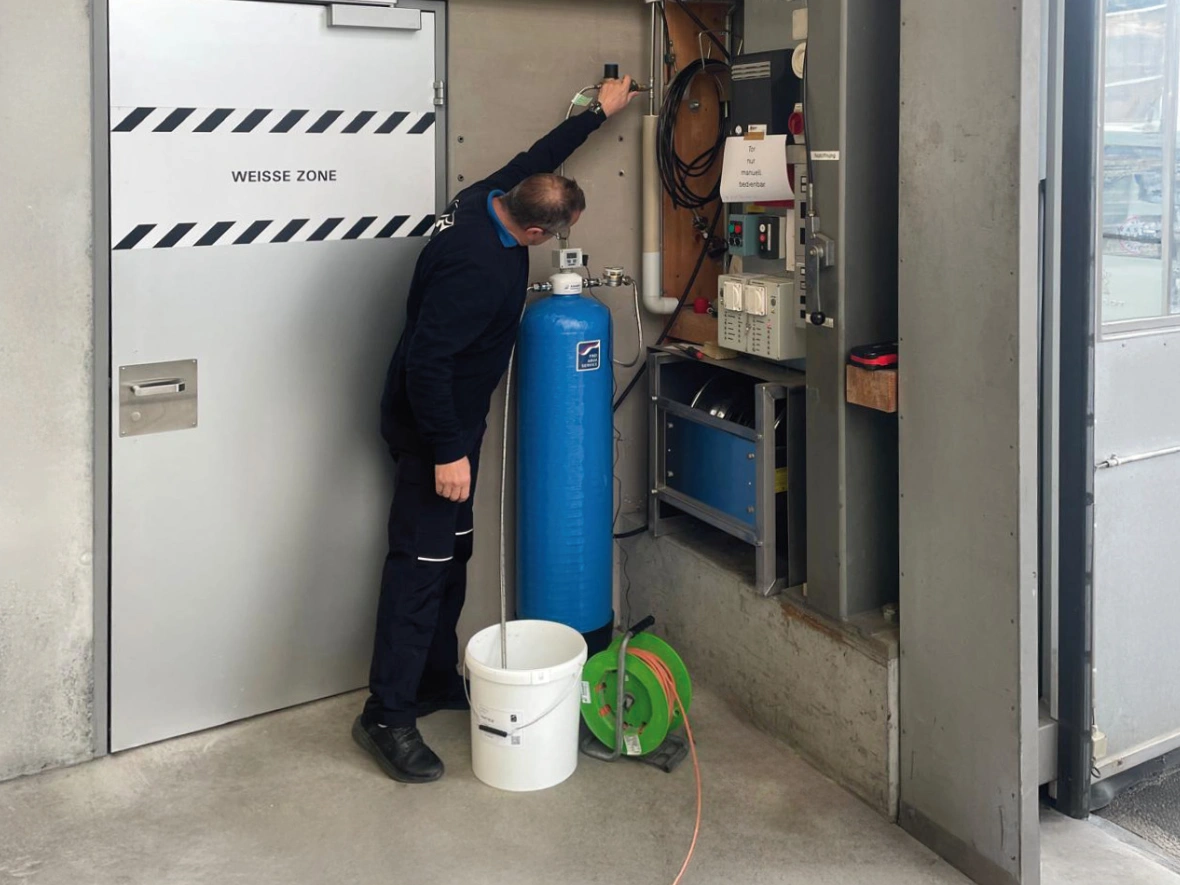
A VE cartridge had already been on site; it had been purchased directly online. Since it was installed without being commissioned by a specialized company, its performance fell short of expectations—and led to a certain amount of skepticism toward similar systems.
For us, this meant: Don't try to win people over with promises, but with measurable results under real-world conditions. That's why we proposed a trial installation—with no obligation to buy.
On-site inspection and assessment of requirements by Philipp Bieri.
Installation of a test cartridge – the plant fire department tests water quality and cleaning performance under real-world operating conditions.
Pickup of the test cartridge. The feedback has been consistently positive—the decision to go with the Faon® VE-50 has been made.
Delivery of the VE-50 cartridge in collaboration with our installation partner, Schindler Haustechnik, Frutigen.
Professional commissioning by service technician Daniel Flückiger.
Instead of offering a system right away, we first provided the plant's fire department with a test cartridge. Over the course of four weeks, the team was able to evaluate the water quality and cleaning performance in everyday use.
Based on the successful test phase, BLS opted for the Faon® VE-50 cartridge. This compact solution is designed to meet actual needs: about ten vehicle washes per week, using approximately 20 liters of deionized water per wash—space-saving, low-maintenance, and with no wastewater loss.

All vehicles dry without leaving streaks after washing—without the need for manual drying or polishing. This saves time with every wash.
The ongoing costs are limited to replacing the resin every 2 to 3 years. There is no wastewater loss, as is the case with a reverse osmosis system.
The compact cartridge takes up little space in the wash bay and can be operated by staff without any special training.
Clean, shiny emergency vehicles make a positive impression on employees, partners, and the public—and underscore BLS’s commitment to quality.
Technical Sales Consultant
Free Aqua service LTD
Your Specialist
Bern, French-speaking Switzerland, and industrial facilities.
Frei AquaService AG – Available 24/7 throughout Switzerland.
«After our experience with an Internet cartridge that wasn’t properly commissioned, there was some skepticism—and rightly so. The test installation demonstrated what a correctly sized and properly commissioned VE cartridge can do. That’s exactly how you regain trust.»
Deionized water (DI water) is water from which all dissolved salts and minerals have been removed. As a result, no limescale or drying spots remain on painted surfaces when the vehicle dries. Vehicles dry spot-free, without the need for manual drying with a chamois or additional polishing.
A reverse osmosis (RO) cartridge will only deliver the expected water quality if its sizing, connection, and commissioning are appropriate for the raw water and its intended use. At BLS in Frutigen, a cartridge purchased online failed to meet expectations because it was not properly commissioned. After installation by Frei AquaService, the Faon® VE-50 consistently delivers a conductivity of around 10 µS/cm.
With about ten car washes per week and roughly 20 liters of deionized water per wash, the Frutigen Professional Fire Department expects to replace the resin every 2 to 3 years. Replacement is not necessary until the conductivity reaches a maximum of 50 µS/cm.
About 20 liters of deionized water are needed for the final rinse of an emergency vehicle. The main wash cycle is performed with regular tap water; only the final rinse is done with fully deionized water.
The reference project for the BLS Professional Fire Department in Frutigen included installation and equipment for water treatment, as well as coordination of the commissioning process.
A budget of between CHF 8,000 and 10,000 is a possible guideline, depending on the existing infrastructure. Running costs are limited to replacing the resin every 2 to 3 years. The specific sizing always depends on the raw water hardness and water consumption and is a key component of the project assessment.