Incl. test strips for measuring water hardness (if it makes sense).
Hard water can lead to limescale deposits, increased cleaning effort and unnecessary follow-up costs. With our short, free initial assessment, we clarify whether and which descaling solution makes sense for you - by telephone or on request on site.

With water softening, you reduce the consumption of cleaning agents and avoid limescale deposits in pipes and appliances - this reduces maintenance and repair costs. At the same time, hot water installations such as boilers, heat exchangers and fittings need to be descaled less frequently and water heating requires less energy thanks to less limescale (3 mm limescale = approx. 20 % more effort).




*This needs analysis page is aimed at people, administrations and industrial companies who would like to test a descaling solution, are looking to replace an existing descaling system or are dissatisfied with their current solution. Without this prior information and a specific interest, we are unfortunately unable to offer free advice or preliminary test strips.



Frei AquaService AG
Answer a few short questions - we will show you a suitable Fawa® solution as a non-binding recommendation based on your information.


Water is everywhere. When cooking, showering, washing - and quietly in the background in boilers and heating systems. How hard your water is also determines what remains invisible in the system and what settles as limescale. You often only notice it when the coffee machine starts acting up or the aerator is covered in white again. And then you ask yourself: Is it really necessary?
The short answer: not necessarily. If you know your water hardness, you can act much more pragmatically - and also more cost-efficiently. Dose cleaning agents correctly instead of "on the off chance". Protect appliances as a precaution instead of decalcifying or replacing them later at great expense.
In short: water hardness is not a minor matter. It influences comfort, the value retention of your building technology and energy consumption every day.
Planned maintenance & environmental protection: If you know your water hardness, you can dose cleaning agents and detergents correctly and prevent over- or under-care. At the same time, the use of aggressive cleaning agents is considerably reduced - limescale can only be removed with strong chemicals, and their consumption is significantly reduced. This protects surfaces and prevents unnecessary amounts of cleaning agents from entering the waste water.
In Switzerland, water hardness is usually measured in French degrees of hardness (°fH) usual. For orientation:
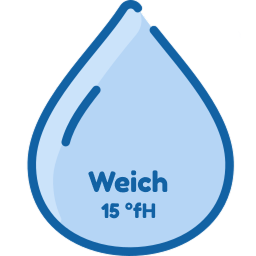
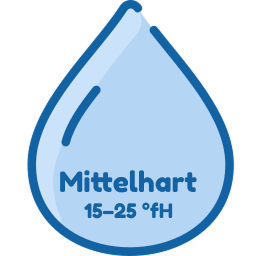
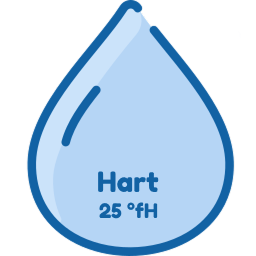
Conversion (standard values): 1 °dH ≈ 1.78 °fH - 1 °fH ≈ 0.56 °dH
One Efficient limescale protection by means of a softening system (ion exchange), for example, we recommend from a water hardness of approx. 20 °fH. From this water hardness, regular boiler maintenance is also advisable as additional protection for your boiler/heating system.
Good to know: We plan systems demand-oriented - to suit the number of people, consumption, available space and existing installation (single-family home, multi-family home, commercial).




1. order test strips - free of charge* for addresses in Switzerland.
2. measure value - with instructions in just a few seconds.
3. upload or communicate the result - by form/telephone.
4. individual advice - We recommend the right solution and show you the investment and operating costs.
5. if required: on-site check - Checking the installation, space requirements, connection options.
For the Quick orientation very well suited. For detailed planning, a More precise measurement and the design of your system can be precisely determined.
For households, we recommend measuring the water hardness at least once a year. It also makes sense to carry out a measurement after installation work, when moving in or when appliances/fittings become noticeably calcified.
Municipal values are reference values on the mains. Values can change slightly in domestic installations (aerators, filters, storage tanks). Therefore: measure at the tap.
Limescale settles wherever water is heated - regardless of the heating system. Limescale protection pays off especially with hard water and larger storage tanks.
Yes, a tried and tested process that is widely used in Switzerland. The water remains perfectly edible. We design in such a way that hygiene, comfort and efficiency are just right.
Typical 15-20+ years with professional installation and regular maintenance. Resin and wearing parts are checked during servicing.
Yes, with ion exchangers, regenerating salt must be added to the salt tank (3-4 times a year for normal water consumption). Our service technician will explain everything you need to know about this during commissioning.
1 mmol/l CaCO₃ ≈ 10 °fH (reference value)
Light - chalky notes disappear, the water works softer. It remains perfectly drinkable.
Many people find decalcified water more pleasant: less lime film, less dry skin - shampoo and soap lather better, reducing the amount needed.
Often yes. However, residues of sodium (salt) or soap or washing-up liquid residues can also leave white stains. Unlike limescale deposits, however, these can be easily removed with water - without the need for aggressive cleaning agents such as vinegar.
The Frei AquaService system continues to supply softened water even in the event of a power failure - as long as there is still capacity in the resin.
During this time, however, the controller cannot record any water quantities and therefore cannot calculate the remaining capacity correctly.
For short interruptions (1-3 hours), this is unproblematic and has no noticeable effects.
During longer power outages, however, the system may reach its capacity and the water may temporarily no longer be softened.
In this case - or if there is uncertainty - it is recommended to carry out a manual regeneration after the power supply has been restored. The system is then fully operational again.
Yes, we plan according to your needs, including a maintenance concept and cost overview.